

Important men with big sideburns, wide lapels and fat-knotted polyester ties swaggered through the frosty February air in 1972 America. Harry Nilsson’s #1 hit “Without You” trumpeted from radios across the country as the not yet disgraced Richard Nixon, Henry Kissinger and entourage boarded a flight to Beijing for Tricky Dick’s self-proclaimed “week that changed the world.”
In Nilsson’s paean to ultimate, life-ending loss he cries, “I can’t live, if living is without you. I can’t live, I can’t give anymore.” As the success of Nixon’s mission necessarily portended the failure of Formosa’s marriage to America, many may have thought Harry was singing Taiwan’s swan song. But determined members of the American Chamber of Commerce in Taipei (AmCham) were crooning a different tune, Al Green’s then #4, “Leeeeeet’s, let’s stay together….”
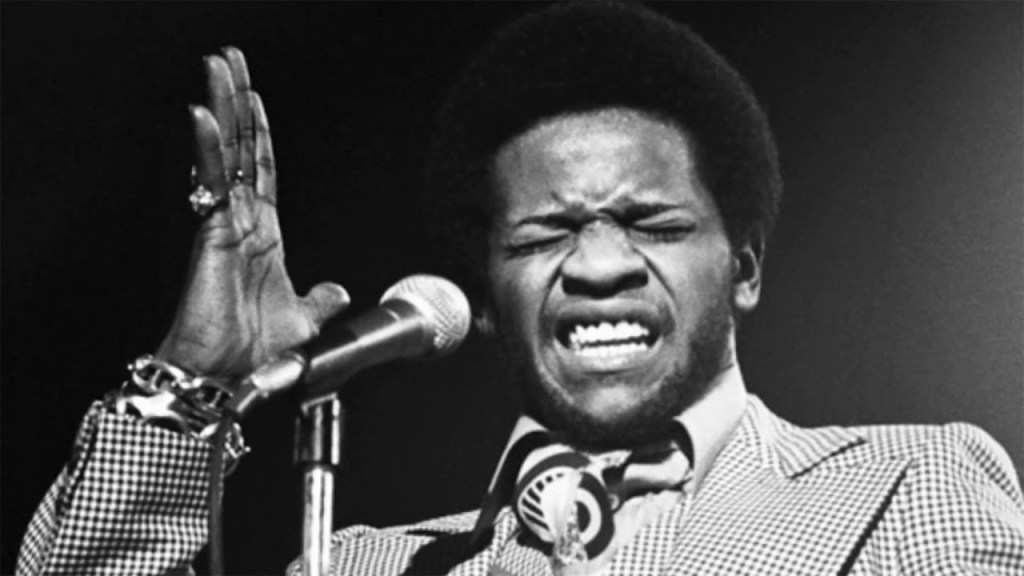
AmCham was founded in 1951 with a mission to improve the business environment while serving as a vital bridge between the U.S. and Taiwan and has since grown to more than approximately 1,000 members representing over 500 companies across a diverse array of sectors. When Taiwan was “Free China” and Beijing was “Red China,” that mission was a much simpler task. As the only girl at the dance, Taiwan had Washington’s undivided attention for the first 20+ years of AmCham’s efforts. Then came Nixon and Mao signing the Shanghai Communique which could easily have been the beginning of the end.
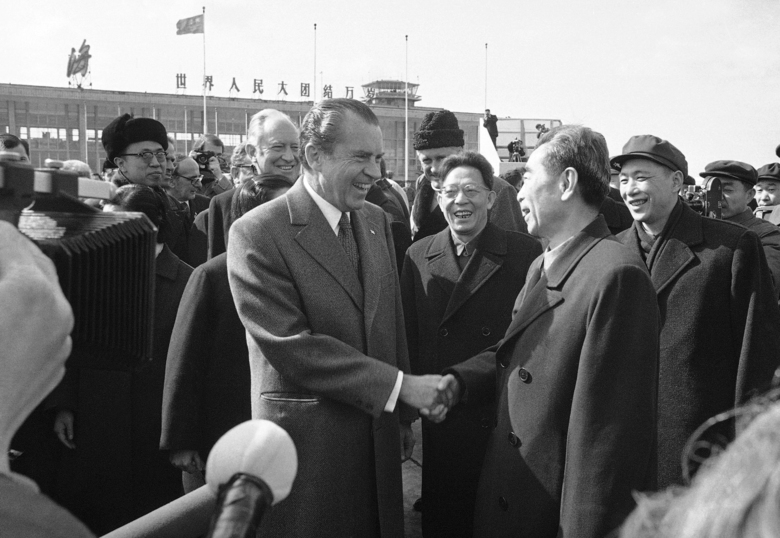
Not one to let the interests of anyone but the U.S. get in the way of signing a sweeping policy document, Kissinger employed what had become his key negotiation tactic of “Constructive Ambiguity” which deliberately left Taiwan in limbo. While the U.S. acknowledged the One China policy then espoused by the governments on both sides of the Taiwan Strait without endorsing the mainland’s version and agreed to cut back military installations on Taiwan, the document stated the U.S.’s interest in a “peaceful settlement of the Taiwan question” with the details to be decided at a later date. Much later in fact.
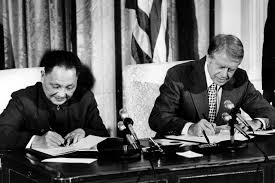
Fast forward 7 years to the Carter administration and its Joint Communique on Diplomatic Relations with China. Released on December 15, 1978 and effective January 1, 1979, it officially began relations with China while officially ending relations with Taiwan. Regarding the divorce from Taiwan, the document stated the U.S. “will maintain cultural, commercial, and other unofficial relations with the people of Taiwan.” Easy to say but harder to do. And if Taiwan and its expats were caught flat-footed, they could easily have come up short.
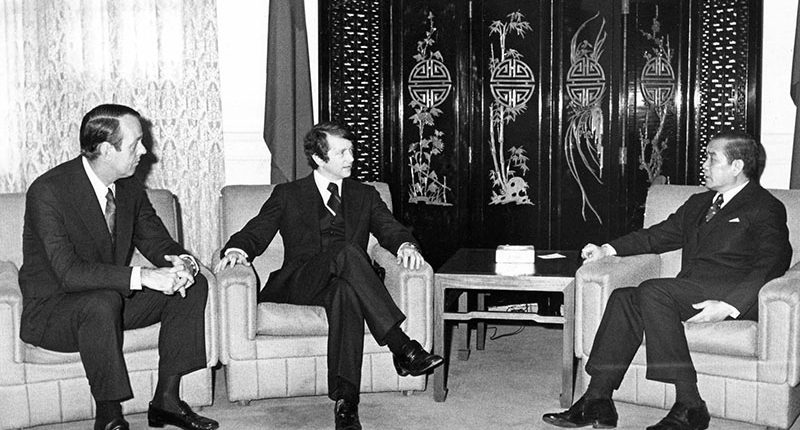
So we can all be thankful that “Be Prepared!” was the motto AmCham’s Chairman Robert P. Parker took to heart as a Cub Scout, Boy Scout, Explorer Scout, and Air Explorer. Much to the benefit of both Taiwan and the U.S., he and former Chairman Marinus “Dutch” Van Gessel had already been deeply enmeshed in plumbing the parameters of a comprehensive solution the whole time. But it seemed his outreach fell on deaf ears. “A number of the pragmatic problems that would inevitably arise from normalization were anticipated by our Chamber several years before,” said Parker, “And for at least three years we had been proposing a series of specific questions to the Administration – to the White House, to the national security advisor, to the secretaries of state, to the Taiwan desk officers – and we never received a responsive answer.”
Parker was told that Washington would craft an Omnibus Bill to address the issues of the new relationship. Typically created for tying together several unrelated and diverse issues to pass on a single vote, Omnibus Bills are often ten pounds of manure in a five-pound bag and rarely fully address the issues they’re assigned to solve. As Parker saw, this one was no exception, “Once we got it in hand, we found out that from the standpoint of private interests, business interests between the United States and Taiwan, its language was ambiguous, its approach frequently naïve, and it was wholly inadequate to meet the needs of the ongoing commercial and trade relationship between the United States and Taiwan.”
It was then Parker earned the sobriquet of the “Underground Ambassador” when he went to Washington to testify at hearings conducted by the Senate Foreign Relations Committee and House Foreign Affairs Committee. Under Parker’s and other leaders’ assault, the Carter Administration’s proposed bill was scrapped by Congress in favor of the Taiwan Relations Act, formed largely on AmCham’s specific proposals.
In a nutshell, the TRA successfully assures the security, defense and legal status of Taiwan in its new relationship with the U.S. but Parker and Van Gessel didn’t stop there. Realizing the importance of the social institutions functioning in the expat community, they knew their work was incomplete until they did their best to shore those up as well. So they continued their labors until Taipei American School, English Language Radio (ICRT), Taipei Youth Programs (TYPA) & The American Club in China (ACC ) were all safe and sound as well.
So it was through years of hard work and proactive efforts of AmCham that the crisis of the American government “derecognizing” Taiwan became a crisis largely averted. Sure, things weren’t as wonderful as before Nixon’s trip to China but we all realize now, especially when we see recent events in Hong Kong, that they could have ended up much worse.
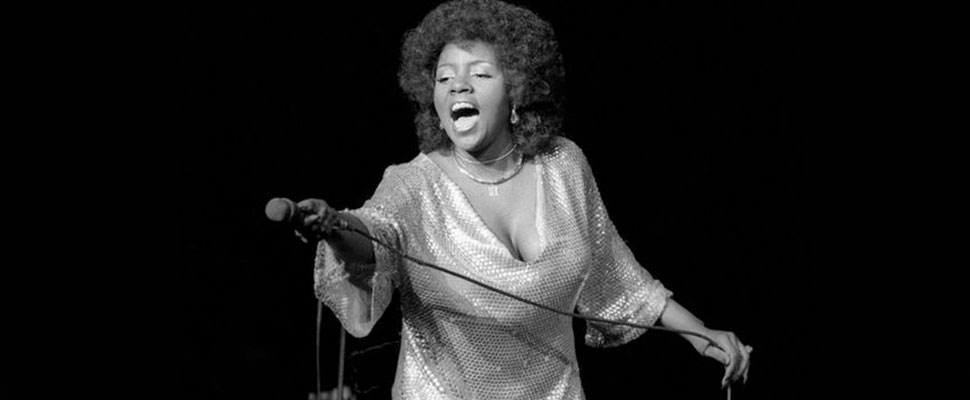
In March of 1979 the U.S. embassy in Taiwan shut its doors forever succeeded by the American Institute in Taiwan at the same time that Taiwan opened the Washington office of Coordination Council for North American Affairs. The Taiwan Relations Act was finally signed into law one month later in April when the number one song on the Billboard Hot 100 was Gloria Gaynor’s “I Will Survive,” which seems to have become Taiwan’s theme song.
 The Klars Afar