
Tag Archives: Taiwan

Without You: How 70s Top 40 Radio Eerily Predicted US-Taiwan Relations

Harry Nilsson “Without You.”

Important men with big sideburns, wide lapels and fat-knotted polyester ties swaggered through the frosty February air in 1972 America. Harry Nilsson’s #1 hit “Without You” trumpeted from radios across the country as the not yet disgraced Richard Nixon, Henry Kissinger and entourage boarded a flight to Beijing for Tricky Dick’s self-proclaimed “week that changed the world.”

In Nilsson’s paean to ultimate, life-ending loss he cries, “I can’t live, if living is without you. I can’t live, I can’t give anymore.” As the success of Nixon’s mission necessarily portended the failure of Formosa’s marriage to America, many may have thought Harry was singing Taiwan’s swan song. But determined members of the American Chamber of Commerce in Taipei (AmCham) were crooning a different tune, Al Green’s then #4, “Leeeeeet’s, let’s stay together….”
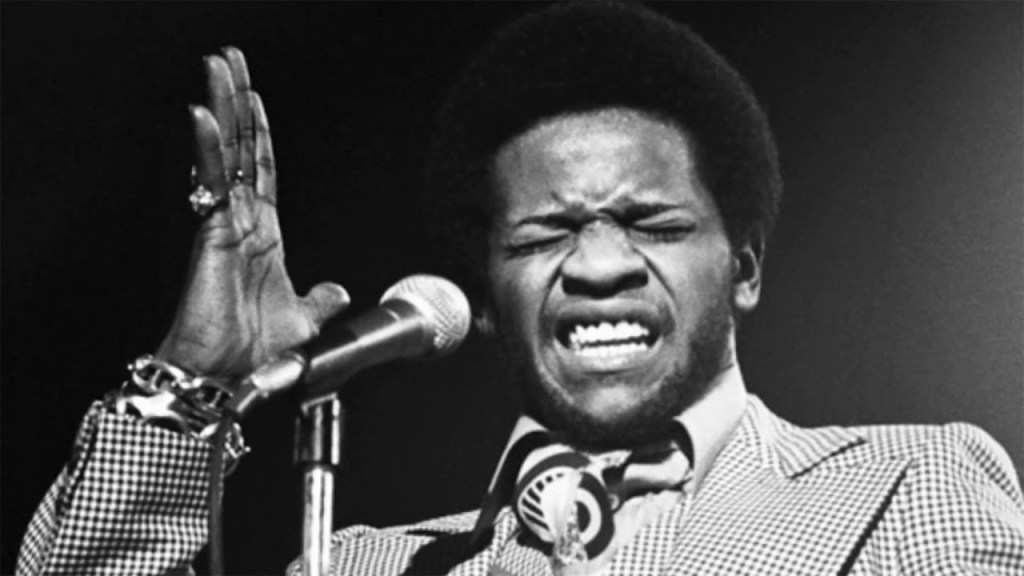
Al Green “Let’s Stay Together.”

AmCham was founded in 1951 with a mission to improve the business environment while serving as a vital bridge between the U.S. and Taiwan and has since grown to more than approximately 1,000 members representing over 500 companies across a diverse array of sectors. When Taiwan was “Free China” and Beijing was “Red China,” that mission was a much simpler task. As the only girl at the dance, Taiwan had Washington’s undivided attention for the first 20+ years of AmCham’s efforts. Then came Nixon and Mao signing the Shanghai Communique which could easily have been the beginning of the end.
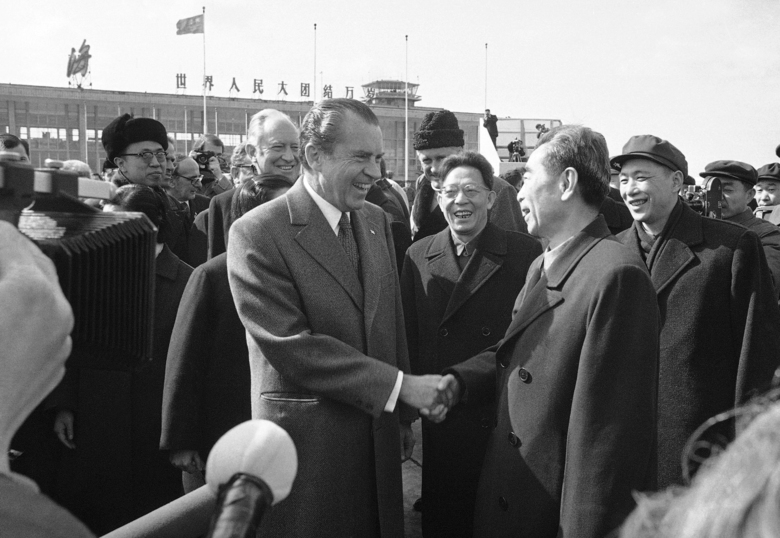
Nixon & Chou En-lai at Shanghai Airport.

Not one to let the interests of anyone but the U.S. get in the way of signing a sweeping policy document, Kissinger employed what had become his key negotiation tactic of “Constructive Ambiguity” which deliberately left Taiwan in limbo. While the U.S. acknowledged the One China policy then espoused by the governments on both sides of the Taiwan Strait without endorsing the mainland’s version and agreed to cut back military installations on Taiwan, the document stated the U.S.’s interest in a “peaceful settlement of the Taiwan question” with the details to be decided at a later date. Much later in fact.

Fast forward 7 years to the Carter administration and its Joint Communique on Diplomatic Relations with China. Released on December 15, 1978 and effective January 1, 1979, it officially began relations with China while officially ending relations with Taiwan. Regarding the divorce from Taiwan, the document stated the U.S. “will maintain cultural, commercial, and other unofficial relations with the people of Taiwan.” Easy to say but harder to do. And if Taiwan and its expats were caught flat-footed, they could easily have come up short.

Carter & Deng Xiaping at the signing ceremony.

So we can all be thankful that “Be Prepared!” was the motto AmCham’s Chairman Robert P. Parker took to heart as a Cub Scout, Boy Scout, Explorer Scout, and Air Explorer. Much to the benefit of both Taiwan and the U.S., he and former Chairman Marinus “Dutch” Van Gessel had already been deeply enmeshed in plumbing the parameters of a comprehensive solution the whole time. But it seemed his outreach fell on deaf ears. “A number of the pragmatic problems that would inevitably arise from normalization were anticipated by our Chamber several years before,” said Parker, “And for at least three years we had been proposing a series of specific questions to the Administration – to the White House, to the national security advisor, to the secretaries of state, to the Taiwan desk officers – and we never received a responsive answer.”

Parker was told that Washington would craft an Omnibus Bill to address the issues of the new relationship. Typically created for tying together several unrelated and diverse issues to pass on a single vote, Omnibus Bills are often ten pounds of manure in a five-pound bag and rarely fully address the issues they’re assigned to solve. As Parker saw, this one was no exception, “Once we got it in hand, we found out that from the standpoint of private interests, business interests between the United States and Taiwan, its language was ambiguous, its approach frequently naïve, and it was wholly inadequate to meet the needs of the ongoing commercial and trade relationship between the United States and Taiwan.”

It was then Parker earned the sobriquet of the “Underground Ambassador” when he went to Washington to testify at hearings conducted by the Senate Foreign Relations Committee and House Foreign Affairs Committee. Under Parker’s and other leaders’ assault, the Carter Administration’s proposed bill was scrapped by Congress in favor of the Taiwan Relations Act, formed largely on AmCham’s specific proposals.

Dutch van Gessel (left) and Robert Parker (center) from AmCham meet with Premier Y.S. Sun on problems posed by the change in the U.S.-Taiwan relationship.

In a nutshell, the TRA successfully assures the security, defense and legal status of Taiwan in its new relationship with the U.S. but Parker and Van Gessel didn’t stop there. Realizing the importance of the social institutions functioning in the expat community, they knew their work was incomplete until they did their best to shore those up as well. So they continued their labors until Taipei American School, English Language Radio (ICRT), Taipei Youth Programs (TYPA) & The American Club in China (ACC ) were all safe and sound as well.

So it was through years of hard work and proactive efforts of AmCham that the crisis of the American government “derecognizing” Taiwan became a crisis largely averted. Sure, things weren’t as wonderful as before Nixon’s trip to China but we all realize now, especially when we see recent events in Hong Kong, that they could have ended up much worse.
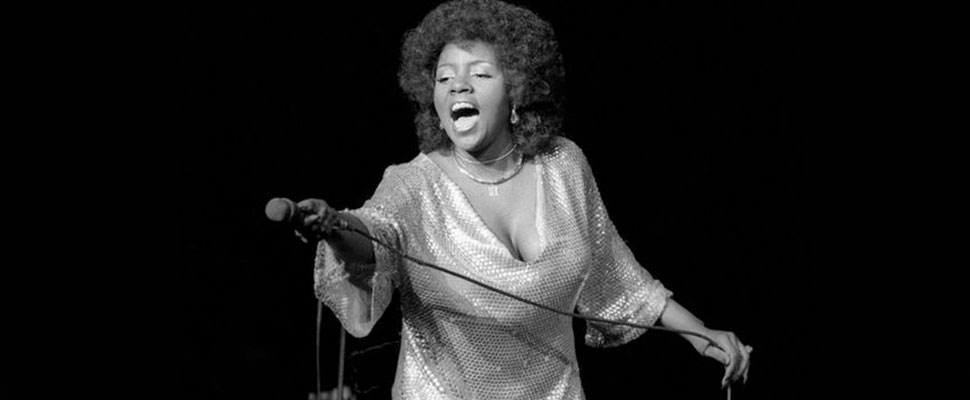
Gloria Gaynor “I Will Survive”

In March of 1979 the U.S. embassy in Taiwan shut its doors forever succeeded by the American Institute in Taiwan at the same time that Taiwan opened the Washington office of Coordination Council for North American Affairs. The Taiwan Relations Act was finally signed into law one month later in April when the number one song on the Billboard Hot 100 was Gloria Gaynor’s “I Will Survive,” which seems to have become Taiwan’s theme song.
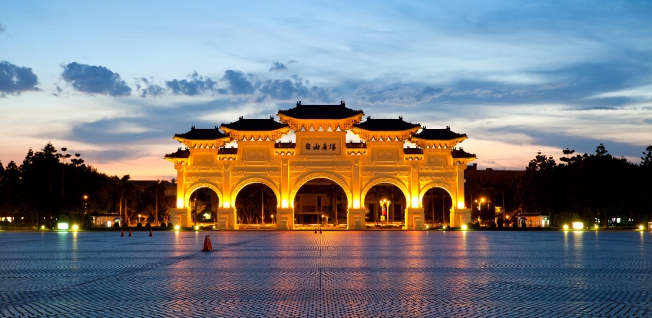
It’s a Slippery Slope to Going Native in Taiwan

How Far Will You Slide?

No matter how actively you choose to assimilate, arriving in Taiwan was the start of a journey from cultural and physical chaos to a new equilibrium, a new you. Whether you merely rub elbows with the culture as you go about your daily life or jump headfirst into the deep end, the following is a loving yet slightly sardonic guide to three stages of “going native.”

The Weather: Wet Behind The Ears & Everywhere Else

STAGE 1: Even after taking three showers a day and dashing from one air-conditioned area to another, you are soaked in sweat. And parts of your body are itching that never itched back home.

STAGE 2: You’ve become the arch nemesis of body dampness, highly skilled at banishing it through careful attention to personal tidiness and the deft use of talcum powder. You change clothes frequently and your seasonal wardrobe evolves on a parallel path.

STAGE 3: 60 degrees Fahrenheit feels like the North Pole but you stay comfy in your puffy jacket and winter flip-flops.

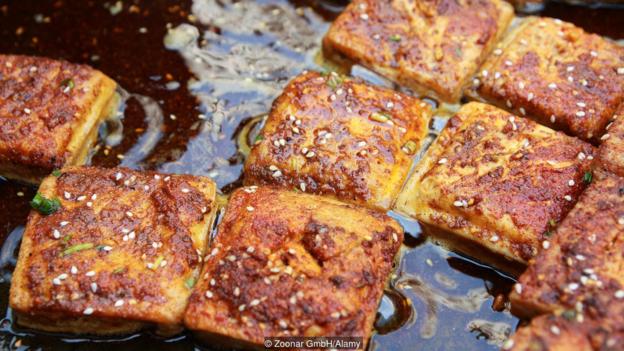
Stinky Tofu: Dirty Diaper Dining

STAGE 1: The first time it’s served near you in a restaurant, your kid remarks “Somebody needs a diaper change.” You vow that stinky tofu smells like nothing you would ever let anywhere near your mouth.

STAGE 2: You finally get drunk enough to try it and….hey, it’s not bad. It actually does taste kind of “rich & creamy.”

STAGE 3: You argue with your Taiwanese friends about which night market stalls serve the tastiest and stenchiest. You follow up with appropriate pilgrimages and compare notes.

The Insects: What’s Bugging You?

STAGE 1: Large, aggressive insects and arachnids seem bent on your torture and destruction. They hide in your shoes, they lurk in the shadows, they leap from the dark. You are afraid.

STAGE 2: Only spiders about the size of an NBA player’s outstretched hand give you the shivers now. You have learned to leave them be in the hope that they will hunt and devour the giant flying cockroaches.

STAGE 3: Venomous centipedes have really thick skin, you muse after the third bash at an 8-inch long specimen with a rolled-up magazine. As it rebounds back to crawling towards your bare feet, you swat it a fourth time, yawn and go back to watching TV.

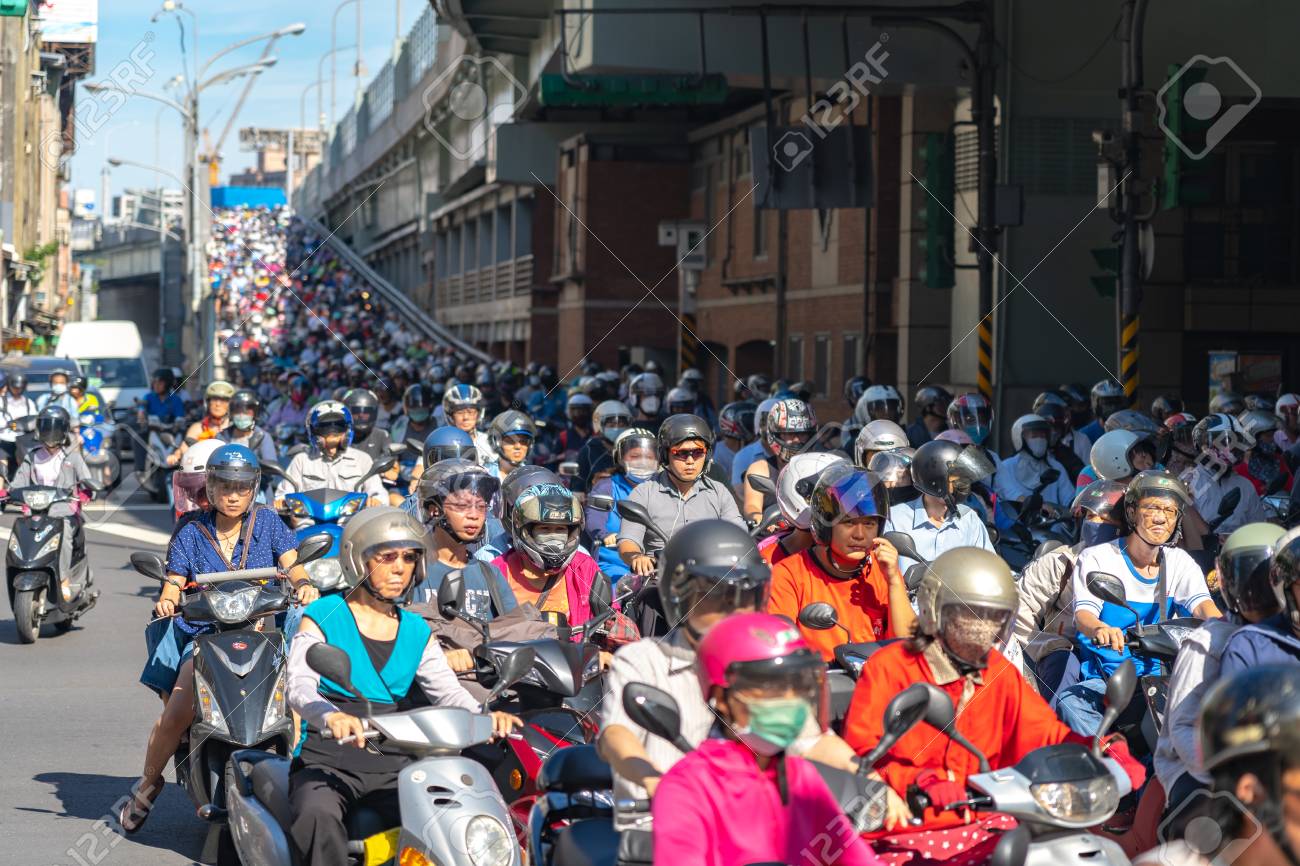
Scooters: The Beehive and the Baseball Bat

STAGE 1: Stoplight scooter traffic in Taipei reminds you of the second grade when you dared Billy Jones to swat a beehive with a baseball bat. You’re sure even venturing into the street on foot will end in a deadly or horribly disfiguring accident.

STAGE 2: You realize scooters are a fast, efficient form of urban transport in Taipei but you ride one like a grandma with groceries. As young men weave dangerously past, you yell, “See you at the wheelchair basketball tournament!”

STAGE 3: Travelling at 60 km/h you are passed by a scooter laden with two adults, two children and a week’s worth of groceries. You wonder why they left their dog at home because you can see exactly where it would fit.

Other Foreigners: If Looks Could Kill

STAGE 1: As a sweaty, dehydrated mess, riddled with salt stains, you gaze at any other foreigner like they’re a life-raft and you’re being circled by sharks. Even if you have no immediate distress with which they can help, just a nod of recognition from them can lift your culture-shocked soul. You notice some look the other way and walk more quickly.

STAGE 2: You find the walking-train-wreck-newbies a little embarrassing so you look away and hope they don’t notice you. They can really throw a flaming monkey wrench into your cool new “I’m now comfortable living here” persona.

STAGE 3: When you see an obvious new arrival looking befuddled, you walk up to him/her with a big, stupid smile on your face and offer to help.

Typhoons: Just Like Hurricanes Only Different

STAGE 1: Your first typhoon rivals prom night in suspense and tension. You study the storm route predictions and prepare for rain-soaked, windswept Armageddon. Then it veers off toward Philippines or Japan just grazing Taiwan and you’re disappointed.

STAGE 2: You under-prepare for a big one and find yourself without water or power for days. After six hours of Jenga by candlelight with your family, you check into a hotel to wait it out.

STAGE 3: Not only do you prepare properly but you look forward to typhoons because it means you might get a day off work

Earthquakes: You’re In Love, You’re all Shook Up

STAGE 1: Growing up in a non-earthquake prone part of the world, you base your concept of physical reality on certain immutable facts, like gravity makes things fall, light is warm, dark is cold, and the ground does not move. So at the slightest seismic shiver, terror grips your spine.

STAGE 2: You become accustomed to small to medium tremors and enjoy researching their epicenters and data online. It’s fun, like being an armchair storm-chaser.

STAGE 3: You leverage the unavoidable arrival of the next big earthquake as a good to reason to have another drink, put things off, miss deadlines, not wash your car, etc. Why bother when we could all suddenly perish in the big one?

Taiwan: NOT Thailand

Remember when you announced your decision to move and friends thought you said Thailand? And how they exclaimed you’re so “brave” (when what they meant was “crazy”) to move halfway around the world? Well, thanks to living here, you’re a different person today than you were yesterday and you’ll be a new one tomorrow. This evolution is catalyzed when the culture surrounding you is different than the one in which you were born. Because, as a human being, you’re prone to social harmony and adaptation like the rest of us.

But the question remains – how far will you slide?

# # #

This is Your Mind…(How I Learned to Shut Up and Scrub the Toilet)

 “I think this silence thing is getting to me,” I said. It was two days into my seven-day silent meditation retreat at Dharma Drum Mountain’s sprawling campus nestled in the beautiful mountains of the Jinshan District on Taiwan’s scenic north coast. Zarko Andricevic, Dharma Teacher for the retreat and a direct Dharma Heir of the DDM founder Master Shen Yeng sat before me, backlit by two windows streaming sunshine on each side. His stark silhouette, face wreathed in shadow imparted a mystical presence.

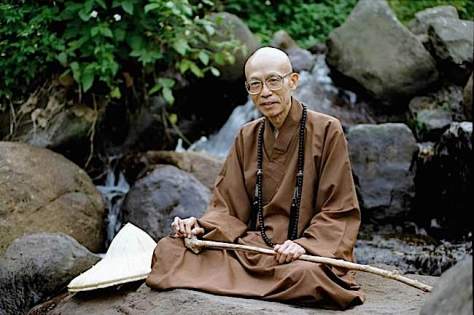
Dharm Drum Mountain Founder Master Sheng Yen

I explained to him that I’m a very verbal person. Deprived of conversation, my mind runs on overdrive – imagining everyone’s lives from their appearance and behavior, inventing entire life stories, a myriad of thoughts and ideas and images popping into my head. “What can I do about that?” Zarko leaned forward, his face half emerged from the shadows, he furrowed his brow and said in a deep, resounding voice,“Congratulations. This is your mind. Your job here is to learn how to deal with it.”

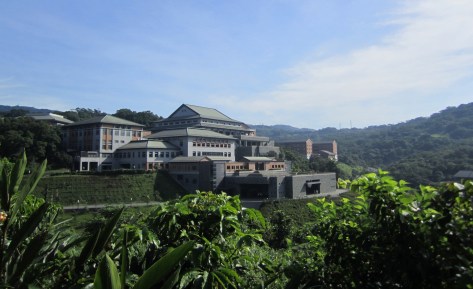
DDM Campus in Northern Taiwan

Five months earlier a friend had told me about the retreat at DDM to be done in English and Chinese. As a morning meditator, I had been chomping at the bit for a deeper experience but my poor Chinese skills had prevented me from doing so in Taiwan. I was living just minutes away from one of the best known Buddhist organizations on the planet with 58 affiliates around the world and my lack of language skills kept me from taking advantage of this precious resource. Finally, this bi-lingual retreat would afford me a chance to dive into an infinitely deep pool.

I admit I was concerned about the magnitude. I’ve been to weekend retreats but never seven days of such intensity – hours of daily meditation, work practice, eating and walking in silence. It was intimidating to say the least.

The bus picked us up at Taipei Main Station on Sunday at noon. The sky gloriously blue, dotted with puffy marshmallow clouds on the drive to the coast. Check-in was easy and the air of anticipation was palpable among over 130 excited participants. The entire event was contained in a single building. Living quarters, meditation hall, dining hall and outdoor trails for walking meditation.

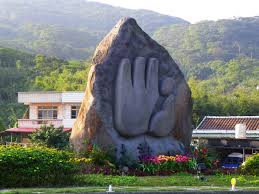
Entrance to the Dharma Drum Mountain Campus.
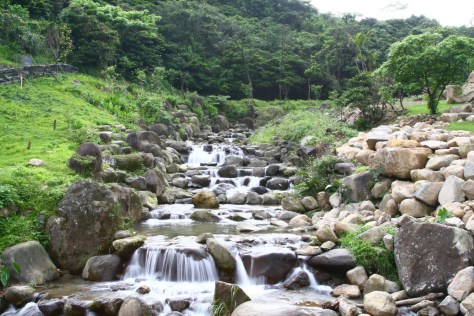
Walking meditation paths at DDM follow this beautiful stream.

At orientation they outlined the daily schedule:
4:00 Wake up, stretching, meditation, Morning Service
6:40 Breakfast, free time
8:30 Meditation, Dharma Talk from Zarko, walking meditation, private interviews
11:30 Lunch, work practice
13:30 Meditation, walking meditation
17:00 Dinner, free time
18:30 Meditation, Dharma Talk from Zarko, Evening Service
22:00 Lights out

Average days were 4-5 hours of sitting meditation. That’s a lot of time spent on a cushion doing nothing, which is exactly what you’re instructed to do in their “Silent Illumination” technique. You train your awareness on “Just Sitting”. Thoughts, physical sensations, sounds and other things may arise but when your mind wanders, you return to just sitting, aware of your body sitting in the space for 40 minutes at a time.

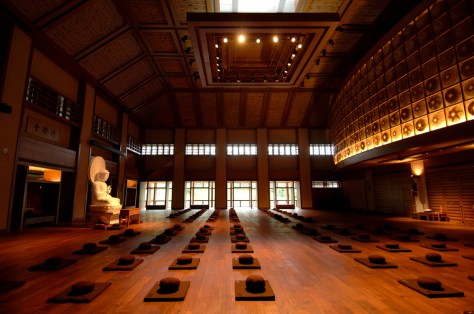
The Chan Hall where we held our meditation sessions.

Paraphrasing Master Shen Yeng himself in his book “The Method of No Method”, you view distractions as you would clouds in the sky, merely observe them as they come and go of their own accord. Some days the sky is sunny, some days dark and stormy but you know there is always a blue sky behind the clouds. Easy in theory, harder in practice but definitely a worthy pursuit. The meditation hall where the sessions were held is pristine, austere, inspiring and beautiful with a large, elegantly rendered Buddha statue.

Meals, eaten in silence except for affirmations of gratitude for their source and preparation spoken in unison, consisted of a delicious and healthy vegan buffet. Always rice, 2-3 entrees, soup and fruit. You’re assigned two bowls, chopsticks and a cloth for cleaning up. When you’ve eaten your fill, you pour a small amount of hot water into each, swirl it around and drink it. Now you’re ready to wipe your bowls clean and put them back in their assigned place in an orderly manner.

I was excited to receive my personal work assignment with visions of chopping wood, carrying water and maybe raking the gravel in a rock garden. Instead I was assigned to clean the 15 urinals and 3 toilets in the men’s restroom. Though a bit crestfallen, I did my best to do it mindfully every day. Knowing we were all on a vegan, high-fiber diet, I eyed everyone entering the restroom with suspicion. “Keep it clean!” I projected in their direction. Sometimes they did. Sometimes they didn’t.

Morning and evening services were a glorious departure from maintaining the silence and quickly became one of my favorite activities. We weren’t allowed to talk but boy did we enjoy chanting for the 30 minutes. In the expansive, high-ceilinged meditation hall 130 voices soared nearly as high as our spirits. It always left me tingly, charged up and ready to hit my meditation cushion in earnest.

In his first Dharma Talk, Zarko said a 3-day retreat is actually more difficult than a 7-day retreat because it takes 3 days to get settled and then it’s over. I found it hard to believe as 7 days sounded a lot more difficult. It turned out to be true. In fact 5 days into this retreat I became so comfortable that I forgot what day it was. It turned out that my mind did calm down considerably and I even found myself “just sitting” a few times.

At times, I couldn’t wait for it to finish but when it finally ended, I was sad it was over and now I can’t wait to do it again. Dharma Drum Mountain is holding another bi-lingual retreat March 2-March 9,2019. The retreat is free of charge but they gratefully accept donations. The deadline to apply is February 2nd. Submit your application at http://onlinereg.ddm.org.tw/2019_bilingual_retreat.I hope to see you there.

Dharma Drum Mountain Buddhist Association

Willy Nilly Hillbillies Hit the “Stinky Mountains”

Born in Kentucky, when I first moved to Ohio for College in 1977 at the age of 18, my accent earned me the nicknames, “Briar-Hopper” & “Hillbilly”. Having since lived in the UK, Japan and now Taiwan, I seem to move around a lot – Willy Nilly if you like. Now if this all seems like a manufactured set-up for that headline, you’re probably right. But now that we’re really rolling here in the Magic Rock (see earlier post), we figured it was time to pack up the minivan and head for the mountains.

On of the many benefits of our apartment’s location is that the immense, bustling metropolis of Taipei lies before us. While the stunning natural beauty of Yangmingshan National Park lies just behind us. So we did some homework to find a family-friendly hiking trail, loaded the vehicle with beverages, snacks and canines and chose the Lenshuikeng area. According to the Yangmingshan National Park website, “The Lengshuikeng region is a low-lying depression which was created when the lava from Mt. Qixing and Mt. Qigu formed a barrage. Water then accumulated, turning the area into a lake, which eventually leaked out and dried up to expose the lake bottom and form today’s landscape. The water temperature of the hot springs in this area only reaches 40°C (104°F), far below that of other springs in other areas, hence its name Lengshuikeng, which means “cold water pit”.” 

All this sounded great as we described it to Griffin and Bodhi once they had clicked their seat belts and we were on the road. Griffin asked where it was exactly and when we told him it was in the mountains, he moaned, “Not the mountains! I hate the mountains! It STINKS up there.” Of course the stink he was referring to is the sulfur smell of the fumaroles and hot springs since we sit atop an active volcanic area. So we rolled down the windows and made it into a game.  Whenever we drove through a cloud, we guessed – was it a raincloud or a stink cloud? More often than not, it was a stink cloud but the kids enjoyed it.

We decided on a hike to the Juansi Waterfall that started on a suspension bridge and ended at a waterfall – 1.2 kilometers, 2.4 there and back. First we needed water for the dogs.

It's hot here in Taiwan this time of year but not quite as hot in the mountains. Even though they've recently had haircuts to help them keep cool, we always make sure our pets get plenty of water.
It’s hot here in Taiwan this time of year but not quite as hot in the mountains. Even though they’ve recently had haircuts to help them keep cool, we always make sure our pets get plenty of water.

And then we were off and hiking. Of course Griffin and Bo complained a fair bit. Their legs hurt, they were tired, they got on each others’ nerves, etc. but it appears they occasionally enjoyed the  walk and Mommy & Daddy were not backing down.

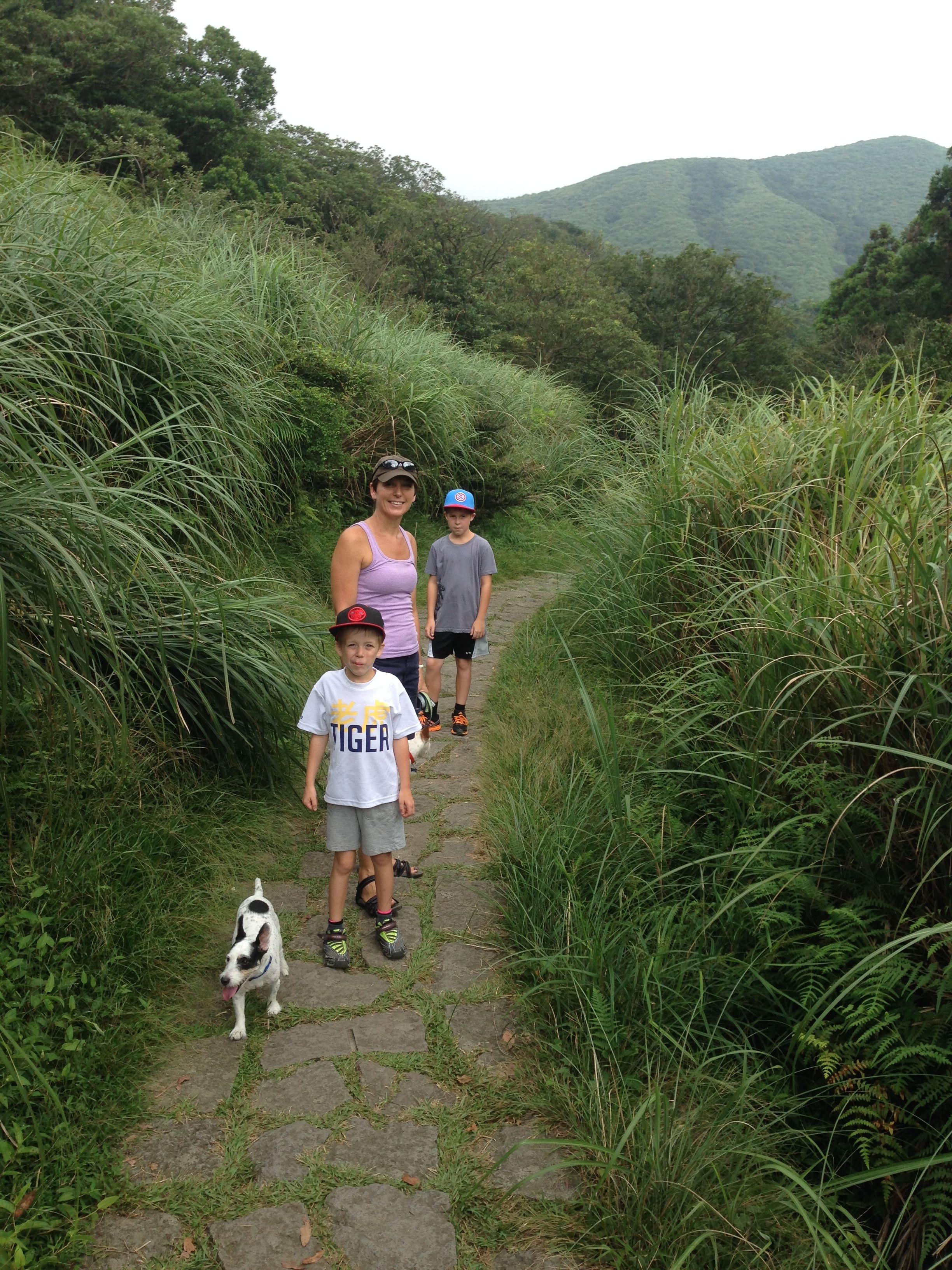
The trail started in the midst of the tall grass that covers many of the mountains here. I've been told it's one of the plants that has adapted to the sulfurous soil and air.
The trail started in the midst of the tall grass that covers many of the mountains here. I’ve been told it’s one of the plants that has adapted to the sulfurous soil and air.

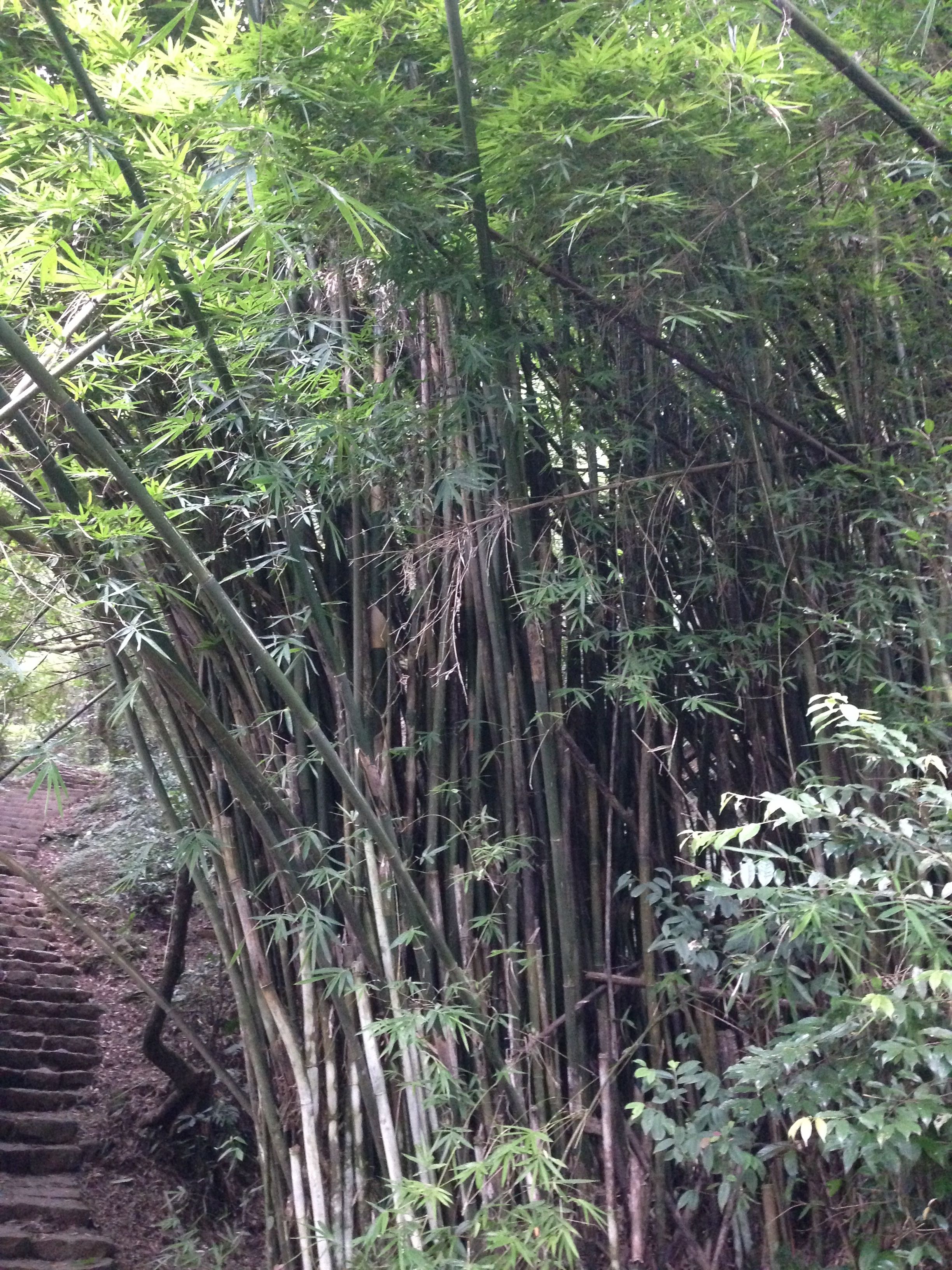
The trail was paved and wound through beautiful bamboo thickets and thick vegetation.

Fabulous, towering bamboo and various jungle vegetation greeted us along the route.

After much trudging, we made it to the waterfall which was beautiful and the perfect relaxing spot for a snack.

This is the Juansi Waterfall. A beautiful spot we highly recommend.

And what post would be complete without video?

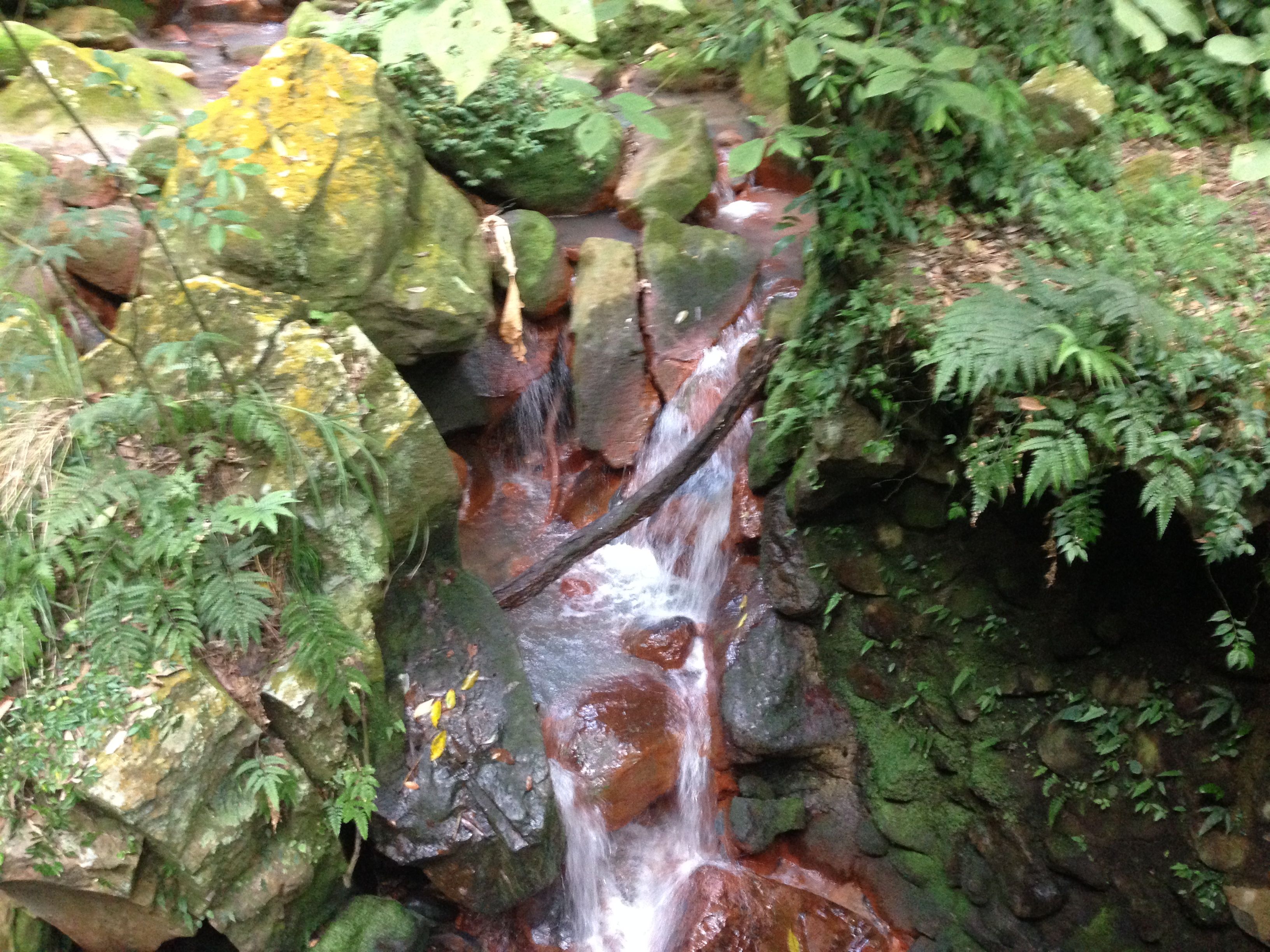
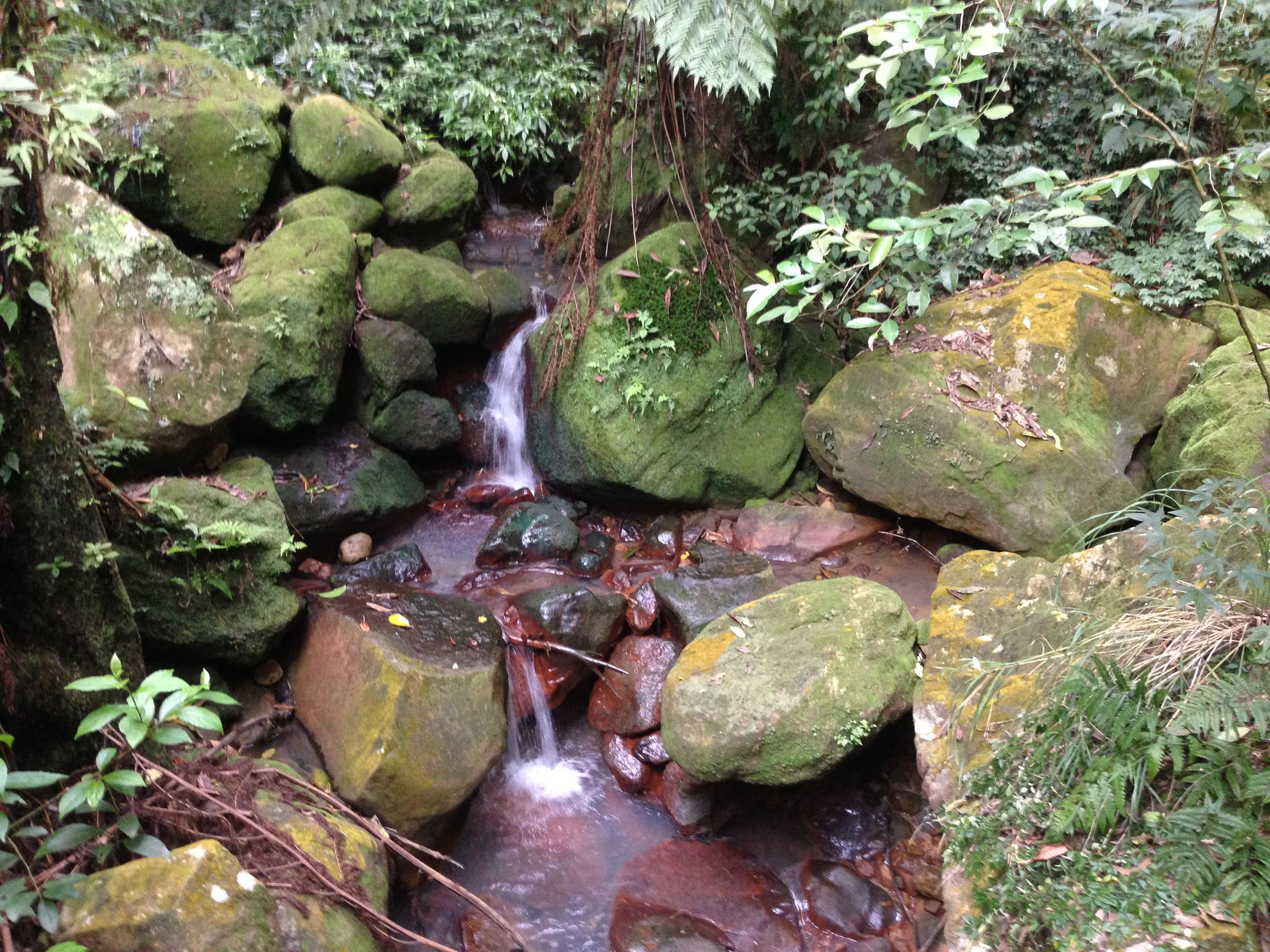
But as with any other trail into the mountains in Taiwan, there were other, slightly smaller waterfalls everywhere.

Throughout the mountains of Taiwan, small streams and waterfall abound.

Another small waterfall.

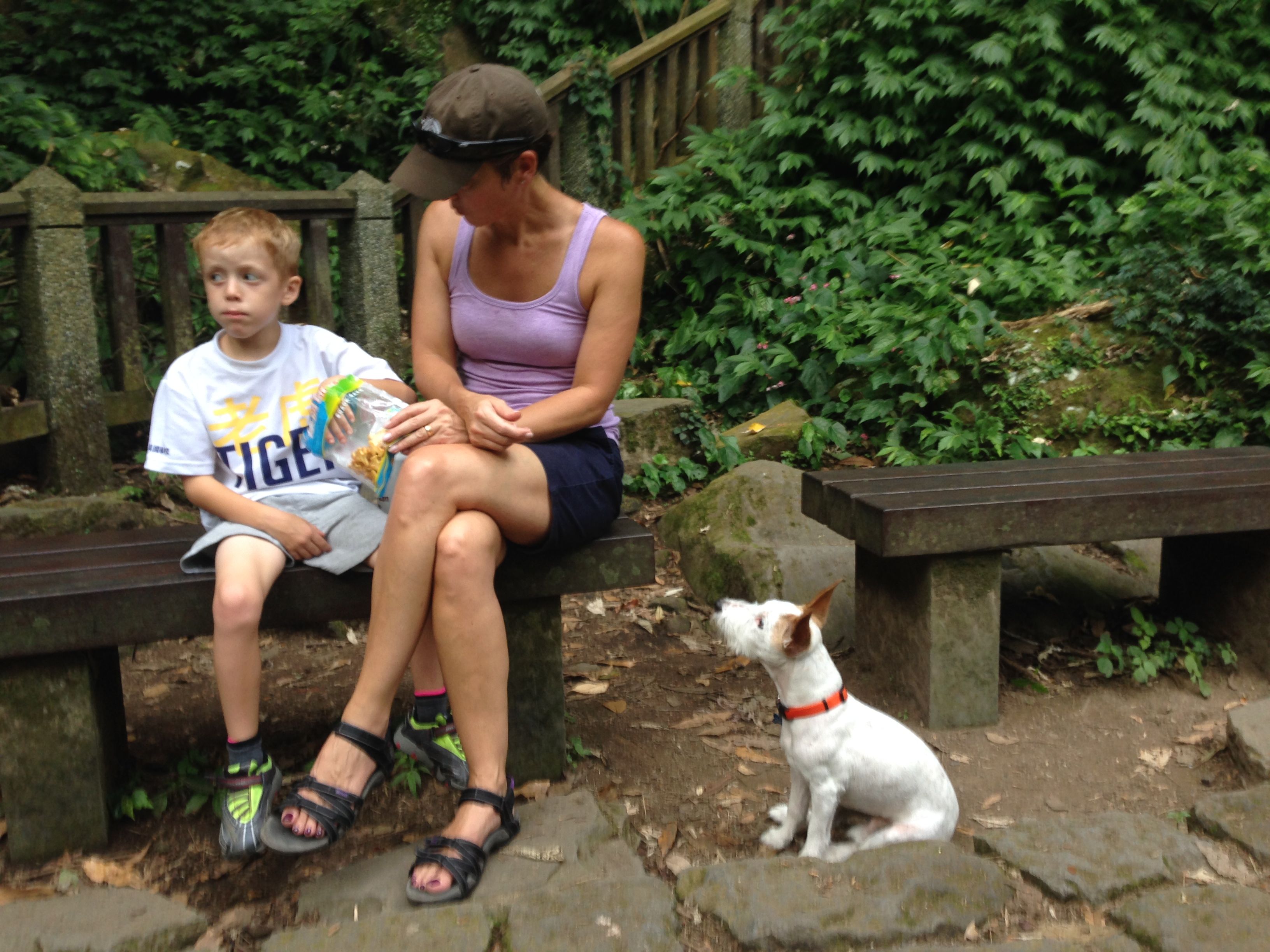
While we rested at the Juansi Waterfall, we had snacks and Jake decided he needed some food too so he tried his best to beg for chips (crisps for our UK readers).

Griffin had lent Bo one of his "cool hats" for the hike but they had a minor falling out at the waterfall so he decided two hats are better than one.
Griffin had lent Bo one of his “cool hats” for the hike but they had a minor falling out at the waterfall so he decided two hats are better than one.

Hiking back we discovered the loudest insects on earth engaged in their late afternoon song. We are now convinced these little buggers are what chased the Japanese from Taiwan. Turn up your speakers (but not too much) or put on your headphones to experience their full ear-splitting glory in this video.

After further trudging, we made it back to the suspension bridge for a family photo next to the “Keep off the Grass” sign.

Beautiful family finishes the hike in harmony.

More adventures to come. Thanks for reading our posts and don’t forget to click the embedded images for larger views and leave plenty of comments.

We love and miss you all…

–The Klars Afar